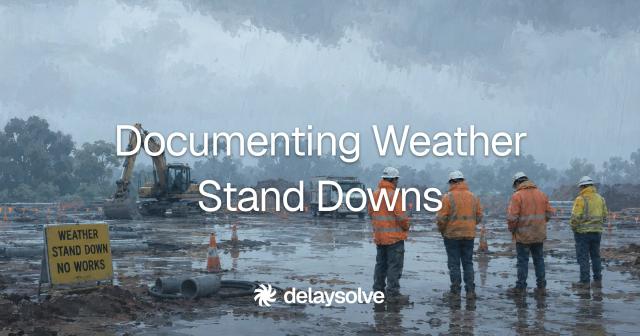
What is a construction weather delay letter?
A construction weather delay letter is a written record notifying that weather conditions have delayed, disrupted, or prevented planned construction work.
It may be called a weather delay notice, notice of delay, weather stand-down notice, or delay letter depending on the project and contract process.
The letter should make the weather impact clear. It should identify:
- what weather condition occurred
- when it started
- where it affected the site
- what work was planned
- what work could not proceed
- whether labour or plant was affected
- whether the delay may affect time, cost, or programme
- what evidence supports the record
The aim is not to argue the whole claim in the first letter. The aim is to create a clear, dated record that the weather event affected the works.
When should weather delays be recorded?
Weather delays should be recorded when weather conditions stop, restrict, or materially disrupt planned work on site.
Examples include:
- heavy rain preventing excavation, trenching, concrete works, or pavement works
- high winds stopping crane lifts, roof works, access equipment, or façade work
- lightning causing a safety stand-down
- extreme heat affecting safe work methods or productivity
- flooding or waterlogged ground blocking access
- poor visibility affecting safe plant movement
- wet conditions preventing compaction, asphalt, or concrete placement
Not every wet day creates a supportable delay. The record should explain why the specific weather condition affected the specific planned activity.
For example, “rain on site” is not enough. “Heavy rain made the trench unsafe and prevented pipe installation between 7:30am and 12:00pm” is more useful.
What should a construction weather delay letter include?
A weather delay letter should include the weather condition, affected works, date and time, location, resource impact, likely time or cost impact, and supporting evidence.
At minimum, include:
- project name
- date of notice
- date and time of weather event
- location or work area affected
- weather condition observed
- planned works affected
- why the work could not proceed
- labour affected
- plant affected
- materials affected, if relevant
- whether works were delayed, disrupted, or stood down
- estimated time impact, if known
- potential cost impact, if known
- photos, videos, weather records, site diary notes, or instructions
- statement that further details may follow if the impact continues
A strong weather delay letter is specific. It does not need to be aggressive or over-written.
Construction weather delay letter example wording
Example only: use this as a drafting guide, not legal advice. Check your contract requirements before sending formal notices or claims.
Subject: Notice of Weather Delay – Project Name] – Date]
We notify you that works at location/work area] were delayed on date] due to weather condition].
The affected activity was planned activity]. The works could not proceed from start time] to finish time / ongoing] because explain practical impact, e.g. the excavation area was unsafe, crane lifts could not proceed due to high winds, or the workfront was waterlogged].
The affected resources included labour crew / plant items / materials, if known]. Supporting records include site photos, weather record, site diary entry, instruction, or other evidence].
The full time and cost impact is still being assessed and further details will be provided as required.
A completed example could read:
Subject: Notice of Weather Delay – Northern Drainage Works – 12 June
We notify you that drainage works in Zone B were delayed on 12 June due to heavy rain and waterlogged ground conditions.
The affected activity was trench excavation and pipe installation. The works could not proceed from 7:30am to 12:00pm because the excavation area was unsafe and plant access to the trench was restricted.
The affected resources included one drainage crew, one 20t excavator, and two dump trucks. Supporting records include site photos taken at 7:45am and 10:30am, the site diary entry, and the weather record for the project location.
The full time and cost impact is still being assessed and further details will be provided as required.
The example works because it names the condition, work area, affected activity, time period, resources, and evidence.
What evidence should support a weather delay letter?
A weather delay letter is stronger when it includes evidence showing both the weather condition and the practical effect on the works.
Useful evidence includes:
- site photos showing rain, flooding, waterlogged ground, unsafe access, or affected work areas
- videos showing site conditions
- weather station records
- Bureau of Meteorology observations, where relevant
- site diary entries
- supervisor notes
- safety stand-down records
- pre-start or toolbox notes
- crane wind readings, if relevant
- plant allocation records
- labour timesheets or standby records
- emails or instructions confirming stand-down or access restrictions
- delivery dockets showing affected materials
- programme notes showing the planned activity
A weather report alone may show that rain or wind occurred. It does not always prove the site work was affected. Combine weather evidence with site-specific records.
How to record labour and plant impact from weather
Weather delay records should identify the labour and plant affected, not just the weather condition.
For labour, record:
- worker types or crew affected
- number of workers affected
- standby or stand-down period
- planned activity
- whether workers were redeployed
- labour rate or cost impact, where relevant
For plant, record:
- plant item or equipment type
- quantity affected
- downtime period
- whether the plant was owned, hired, wet hire, or dry hire
- plant rate or hire cost, where relevant
- whether the plant could be redeployed
Example:
Resource | Quantity | Impact period | Reason affected
Labourers | 4 | 7:30am–12:00pm | Trench unsafe due to waterlogged conditions
20t excavator | 1 | 7:30am–12:00pm | Excavation could not proceed
Dump trucks | 2 | 7:30am–12:00pm | No spoil removal due to excavation stand-down
If the weather caused both idle labour and idle plant, calculate them separately and connect them to the same delay event.
Common mistakes in weather delay letters
The biggest mistake is treating weather as self-explanatory. The letter must explain how the weather affected the work.
Avoid these mistakes:
- writing “weather delay” with no detail
- failing to identify the planned activity
- not recording start and finish times
- attaching a weather report but no site evidence
- failing to show why the work could not proceed safely or productively
- not recording labour or plant impact
- not distinguishing full stand-down from partial disruption
- failing to keep photos or supervisor notes
- waiting until the end of the week to write the letter
- assuming all rain automatically supports an EOT or claim
A strong record connects the weather condition to the work impact.
Weather delay letter checklist
Before sending or saving a weather delay letter, check that it includes:
- [ ] Project name
- [ ] Date of notice
- [ ] Date and time of weather event
- [ ] Weather condition
- [ ] Site location affected
- [ ] Planned activity affected
- [ ] Why work could not proceed
- [ ] Start time
- [ ] Finish time or ongoing status
- [ ] Labour affected
- [ ] Plant affected
- [ ] Material impact, if relevant
- [ ] Photos or videos
- [ ] Weather record
- [ ] Site diary or supervisor note
- [ ] Instruction or stand-down record, if relevant
- [ ] Potential time or cost impact
- [ ] Statement that further details may follow, if needed
Use the free Construction Delay Notice Generator
Need to create a structured notice quickly? Use the free Construction Delay Notice Generator.
DelaySolve’s generator helps turn the basic facts of a site delay into a structured notice you can review, edit, and send. It is designed for practical delay records, not legal advice.
For related guidance, read Document weather stand-down delays for civil subcontractors.
How DelaySolve helps with weather delay records
DelaySolve helps subcontractors log delays, cost labour and plant impact, attach evidence, and keep a structured delay record across live projects.
For weather delays, the practical workflow is:
1. Record the weather delay as it happens. 2. Add the affected work area and planned activity. 3. Capture labour and plant impact. 4. Attach site photos, videos, weather records, and notes. 5. Keep the record available for notices, dayworks, EOT review, or claim discussions.
The value is not just writing a letter. The value is keeping the weather event connected to evidence and commercial impact.
FAQs
What should a construction weather delay letter include?
It should include the weather condition, date and time, affected work area, planned activity, reason the work could not proceed, labour and plant impact, and supporting evidence.
Is a weather report enough evidence for a weather delay?
A weather report helps, but it is stronger when combined with site-specific evidence such as photos, videos, site diary entries, supervisor notes, and records showing the affected work.
When should a weather delay notice be sent?
A weather delay notice should be sent in line with the contract requirements and as soon as practical after the weather event affects the works. Check the relevant contract before sending formal notices.
Can rain support a construction delay claim?
Rain may support a delay claim if the record shows that the weather affected planned works and caused time, cost, labour, plant, or programme impact. The record should explain the practical impact, not just the weather condition.
Should labour and plant be included in a weather delay letter?
Yes, where they were affected. Record the crew, plant items, downtime or standby period, and whether the resources were idle, stood down, or redeployed.